Nyborg Castle

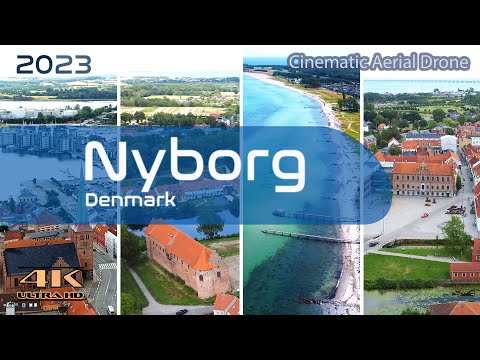
Nyborg Castle is a restored medieval fortress located in the town of Nyborg on the Danish island of Funen. Originally established around 1170, the structure began as a square, moated castle featuring corner towers connected by curtain walls. Over the centuries, it underwent significant architectural evolution, including the addition of a residential palatium in the mid-13th century and later Renaissance modifications under Kings Christian III and Christian IV. Notable work by Italian architect Domenicus Badiaz in 1607 added a distinctive spire to the main tower, known as Knudstårnet. Although severely damaged during the Dano-Swedish War in the late 17th century and partially dismantled for materials in the 18th century, the remaining structures were meticulously restored between 1917 and 1923 under the guidance of Mogens Clemmensen.
The site holds immense historical significance as a central venue for Danish governance during the Middle Ages. It was within these walls that King Eric V Klipping signed Denmark's first constitution in 1282, establishing crucial legal precedents. Furthermore, the castle served as the meeting place for the Danehof, the country's first parliament, until 1413. Following its period of decline and use as a storage facility for grain and gunpowder, the comprehensive 20th-century restoration transformed the property back into a cultural landmark. Today, Nyborg Castle operates as a museum managed by Østfyns Museum, offering visitors insight into its royal past and architectural heritage alongside the nearby Borgmestergården.