Gjorslev

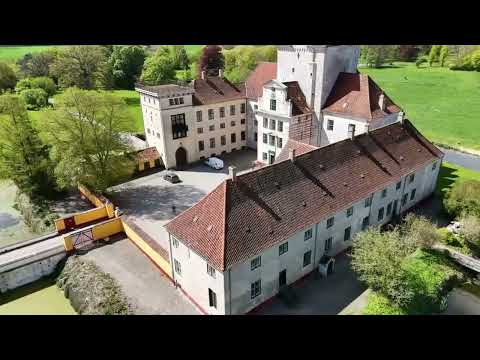
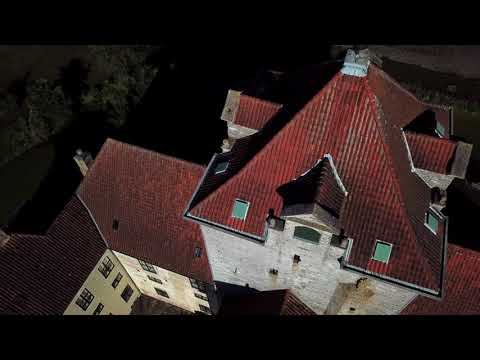
Gjorslev is a well-preserved medieval castle situated on the Stevns Peninsula in Stevns Municipality, Denmark, approximately forty kilometers south of Copenhagen. Construction of the cruciform structure began around 1400 under the direction of Peder Jensen Lodehat, the Bishop of Roskilde, and was completed in 1588. The building stands as a significant example of secular Gothic architecture in the region, characterized by its distinctive cross-shaped layout and surrounding moats. Over the centuries, the estate also incorporated elements of Baroque style, reflecting the evolving tastes of its various owners while maintaining its medieval core.
The castle holds considerable historical significance due to its long and varied ownership history. Originally held by the Diocese of Roskilde, it was confiscated by the Crown during the Reformation in 1537 before passing through several private hands. Notable residents include Christen Lindencrone, a wealthy merchant who purchased the estate in 1743, and the Scavenius family, who owned the property for over a century starting in 1793. Since 1925, Gjorslev has remained in the possession of the Tesdorpf family, with ownership recently transferring from father to son within the lineage. This continuous private stewardship has helped preserve the integrity of the site through centuries of Danish history.
Today, Gjorslev remains a private estate that has recently transitioned away from traditional milk production, marking a new chapter in its agricultural operations. Despite these modern changes, the castle retains its status as one of Denmark's most intact examples of Gothic secular design. Its strategic location on the peninsula and its robust architectural features continue to make it a landmark of cultural heritage. The property serves as a tangible link to the nation's ecclesiastical past and the aristocratic families that shaped the local landscape, standing as a testament to centuries of resilience and adaptation.