Beijing city fortifications

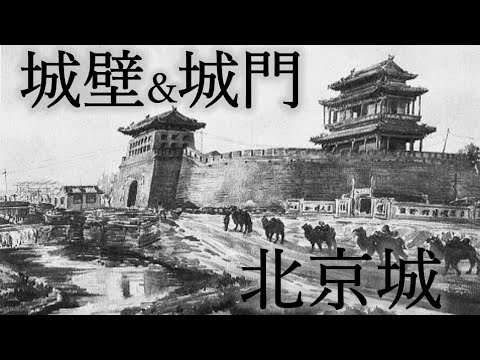
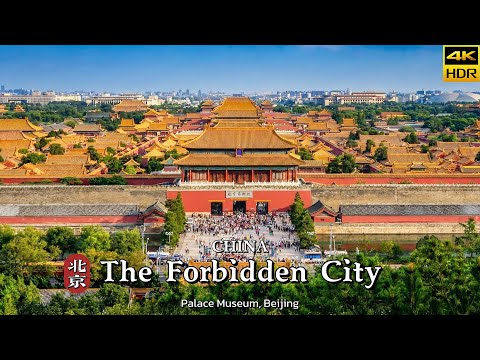
The Beijing city fortifications were an extensive defensive system of walls, towers, and gates constructed in the early 1400s during the Ming dynasty. Serving as the capital for the Yuan, Ming, and Qing dynasties, Beijing required robust protection around its Forbidden City, Imperial City, Inner City, and Outer City. The complete perimeter stretched approximately 60 kilometers, featuring a complex array of architectural elements including gate towers, barbicans, watchtowers, corner guard towers, and a comprehensive moat system. This network represented the most extensive defense infrastructure in Imperial China, designed to safeguard the political heart of the nation through centuries of dynastic rule.
Following the collapse of the Qing dynasty in 1911, the fortifications faced gradual dismantling, with the most significant destruction occurring in the 1950s and 1960s to accommodate modern urban development. Most of the Inner City walls were demolished in 1965 to construct the Second Ring Road and Line 2 of the Beijing Subway, while almost all Outer City walls and gates were removed during the preceding decade. Despite this widespread loss, several key structures remain intact today, including Tiananmen, the gate and watchtowers at Zhengyangmen, the Deshengmen watchtower, and the southeastern corner guard tower. A 1.5-kilometer section of the Inner City wall near Chongwenmen also survives, now forming the core of the Beijing Ming City Wall Ruins Park.
The historical significance of these fortifications is marked by their evolution from the earlier Yuan dynasty city of Dadu. After capturing the city in 1368, Ming General Xu Da ordered the northern walls to be rebuilt and shortened because the original Yuan dimensions were too vast to defend effectively during a siege. While the majority of the ancient barriers have vanished, the surviving components serve as critical historical landmarks. Notably, the Yongdingmen gate was completely reconstructed in 2004, reflecting ongoing efforts to preserve and commemorate the city's rich architectural heritage amidst its rapid modernization.