Kampa Castle

Kampa, also known as Kampa Dzong or Gangba Xian, is a historic town and county headquarters located in the Shigatse Prefecture of Tibet, situated just north of the Sikkim border. The settlement is dominated by an iconic hill-top fort that served as a prominent landmark for early 20th-century expeditions traveling toward Mount Everest. Before the political changes resulting from the Chinese annexation of Tibet, the location functioned as a vital border trading post, facilitating commerce for traders coming from North Sikkim. The site holds cultural significance as the believed birthplace of traditional Tibetan carpet making, a craft that remains associated with the region's heritage.
The fortress gained historical prominence during the colonial era, specifically in June 1903, when Colonel Francis Younghusband led a British diplomatic mission comprising five hundred troops to the site. The objective was to negotiate non-aggression and trade agreements with Chinese and Tibetan representatives. However, the mission stalled when the delegates failed to appear for five months, leading to its eventual recall. The dzong was frequently documented by foreign explorers and artists, including Russian painter Nicholas Roerich and members of the 1938 German Tibet Expedition led by Ernst Schäfer, whose photographs and paintings captured the structure's imposing presence on the landscape.
In contemporary times, Kampa remains a strategically significant location due to its proximity to the well-defined Sino-Indian border established by the 1890 Convention of Calcutta. While the town continues to serve as an administrative center for Kamba County, the surrounding border areas have witnessed increased infrastructure development and troop deployments in recent years. Despite these modern geopolitical tensions, the ancient fort remains a symbol of the region's complex history as a crossroads of trade, diplomacy, and cultural exchange between Tibet, India, and China.
Videos
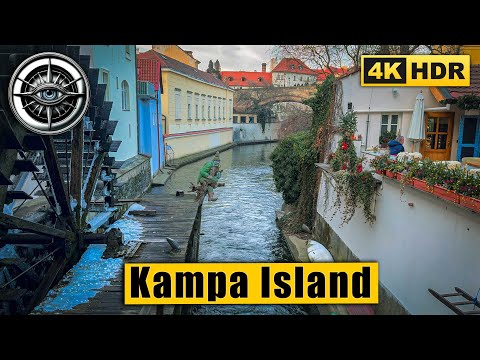
Walking Tour of Prague Lesser Town, Kampa Island 🇨🇿 Czech Republic 4K HDR ASMR

Non-Touristy Walk Through Kampa Island to Charles Bridge | Prague 4K Walking Tour

Prague Morning Walk 4K 🇨🇿 | From Strossmayer Square to Kampa Island (Cinematic Walk)

Prague Golden Hour Magic ☀️ Charles Bridge & Malá Strana Walk | Spring is Here! | 4K
Details
- Location Text
- (གམ་པ་རྫོང 岗巴古堡)