Kayan Berd

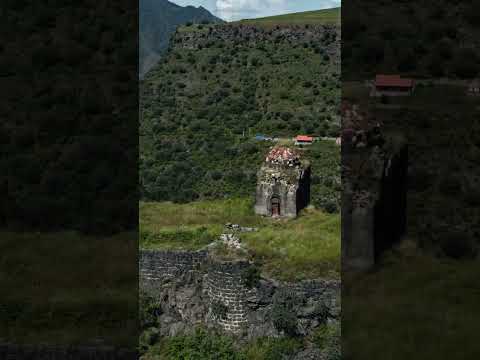
Kayan Berd, also known as Dsevank, is a historic fortress and former monastery of the Armenian Apostolic Church located in the Lori Province of northern Armenia. Strategically positioned on a ridge between two canyons overlooking the Debed River, the site sits geographically between the famous monasteries of Haghpat and Sanahin. While the exact construction date remains uncertain, historical evidence suggests it may have been established by King Ashot II Yerkat in the 10th century. The complex features a triangular wall ring fortified with semi-circular defense towers and houses the Church of Surb Astvatzatzin, which was constructed from distinctive black tuff stone.
The site holds significant historical importance due to its turbulent past involving religious and political conflicts. In 1233, Archbishop Hovhannes of the Zakarid dynasty expanded the fortress into a monastery named Surb Nshan on land claimed by Sanahin, sparking a rivalry between the religious centers. Following the bishop's death, Tatar forces demolished the defensive walls in 1241. Although the structure was subsequently restored, it suffered final destruction at the hands of Timur's troops in the late 14th century and was never rebuilt. The church's unique blue, red, and white dome sustained further damage during an earthquake in 1827.
Today, Kayan Berd exists largely in ruins, serving as an archaeological landmark rather than an active religious or military site. Visitors to the location can observe the remnants of the fortress walls, the damaged church dome, and numerous surrounding ruins including ancient houses, clay water pipes, and cisterns. The vicinity also contains a burial ground dating back to the Early Iron Age, highlighting the area's long history of human settlement. Despite its dilapidated condition, the fortress remains a notable destination for those exploring the medieval heritage and dramatic landscapes of the Lori region.
Videos



Details
- Year Built
- 1233
- Location Text
- Haghpat