Datian County

Datian County is not a castle but an administrative county located in the central region of Fujian Province, People's Republic of China. Situated within the jurisdiction of Sanming City, it occupies a strategic position in the mountainous interior of the province. The area is geographically defined by its coordinates in central Fujian and is historically known by the alternative name Tatien. As a county rather than a fortified structure, it does not possess a specific construction year, architectural style, or physical condition associated with castles. Instead, it functions as a modern governmental division comprising several towns and townships, including Junxi, Shangping, and Huaxing Township, which serve as the primary hubs for local administration and community life.
The historical significance of Datian lies in its formation and evolving administrative affiliations over nearly five centuries. Before 1535, the territory was divided among four neighboring counties: Youxi, Dehua, Yong'an, and Zhangping. It was officially established as a distinct county in 1535, initially falling under the jurisdiction of Yanping Fu, known today as Nanping. Over the subsequent centuries, its governance shifted; in 1734, it was transferred to Yongchun Zhou, and following the establishment of the People's Republic, it became part of the Yong'an Division in 1949, eventually aligning with the modern Sanming Prefecture. This long history reflects the region's changing political landscape and its integration into broader provincial structures.
Today, Datian County serves as a populated residential and agricultural district rather than a historical monument or tourist castle. Demographic records from 1999 indicate a population of approximately 362,566 inhabitants, suggesting a moderately sized community. The area continues to operate under China Standard Time and maintains its status as an integral part of Fujian's inland development. While it lacks the stone walls and towers of a traditional fortress, its enduring presence since the Ming Dynasty highlights its importance as a stable administrative unit in southeastern China.
Videos



Details
- Location Text
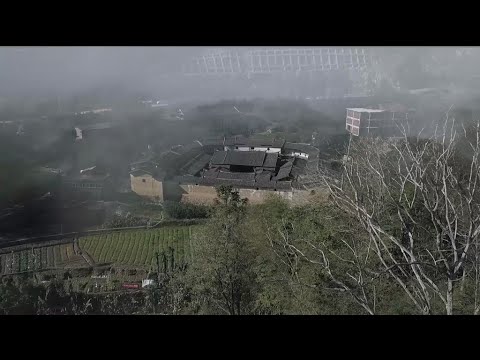
- Pipa castle (琵琶堡)