Ruine Hohenwang

Hohenwang Castle is a prominent ruined fortress located in the municipality of Langenwang within the Styria region of Austria. Perched on a hill at an elevation of approximately 650 to 700 meters, the structure was originally constructed between 1122 and 1160 by Erchinger I. von Landesere. As one of the largest castles in Styria due to its exceptional length, it served as a vital local administrative center, a refuge for the population during crises, and a hub for spreading Christianity in the upper Muerztal valley. Although its owners held regional importance, their judicial powers were limited to lower courts, requiring serious felony cases to be transferred to the district court in Kapfenberg.
The architectural layout features an elongated complex stretching 90 meters from southwest to northeast, comprising a stronghold, two outworks separated by trenches, and a massive shield wall. Notably, the castle never included a donjon. Its design incorporated three well-secured gates, steep cliffs on three sides, and extensive fortifications that made storming the fortress extremely difficult. Over the centuries, the Romanesque core was expanded to include a palas, gallery, kennel, bastion, and representative gatehouse. Historical records from the 15th century describe a detailed interior featuring a chapel, large hall, kitchens, cellars, and stables for twelve horses.
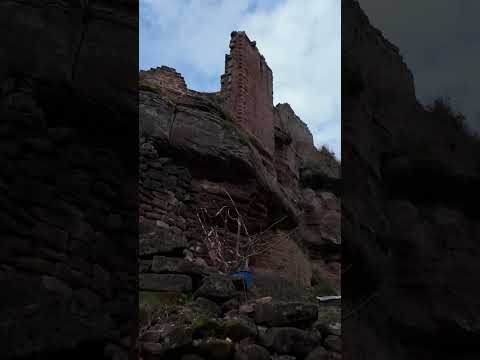
The castle's decline began in the late 18th century following severe earthquake damage, with further destruction occurring during World War II bombing raids. Today, the site remains in a ruined condition but is owned by the Schrack Company and open to the public. Significant preservation efforts over the last forty years by the Association Hohenwang Castle have secured and renovated the remaining walls, including the high castle's shield wall and main gate. Now a symbol of Langenwang, the ruins stand as a testament to medieval military engineering and local history.