Burgruine Finkenstein

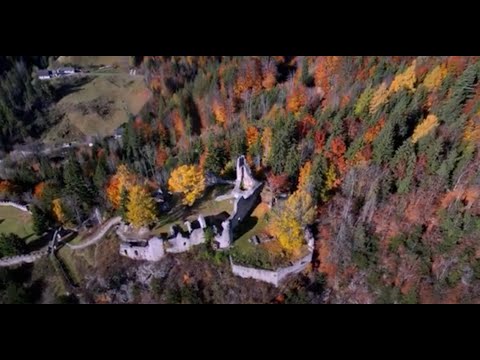
Burgruine Finkenstein, also known as Altfinkenstein, is a medieval rock castle situated on a steep cliff at the southern foot of the Karawanks mountain range in Carinthia, Austria. Overlooking Lake Faak at an elevation of 788 meters, the structure was originally built in the early 12th century by the Finck von Finckenstein family. First documented in 1142, the castle served as a strategic stronghold for the Prince-Bishops of Bamberg and their local ministeriales. Its architectural classification as a rock castle highlights its integration with the natural limestone terrain, providing formidable defensive advantages during the medieval period.
The site holds significant historical weight due to its involvement in regional power struggles and royal protection. In 1233, it was the scene of a fierce feud where Lord Henry of Finkenstein captured the Prince-Bishop of Bamberg, leading to his excommunication by Pope Gregory IX. Centuries later, in the 15th century, Emperor Frederick III utilized the fortress to safeguard his consort, Eleanor of Portugal, during a siege in Vienna. Following the extinction of the original noble line, ownership passed to the House of Habsburg and eventually to the Dietrichstein family, who held the estate until 1861. The Wittgenstein family also owned the property during the early 20th century before it fell into disuse.
Today, Burgruine Finkenstein exists as a picturesque ruin that has been repurposed for cultural events rather than military or residential use. Since the late 18th century, the castle has been uninhabited, gradually decaying into its current state. However, since 1985, the grounds have been successfully transformed into the Burgarena, an open-air amphitheater with seating for 1,150 spectators. This venue now hosts numerous concerts and festivals during the summer months, blending historical atmosphere with modern entertainment while remaining accessible to the public year-round.