Blauwendael Castle

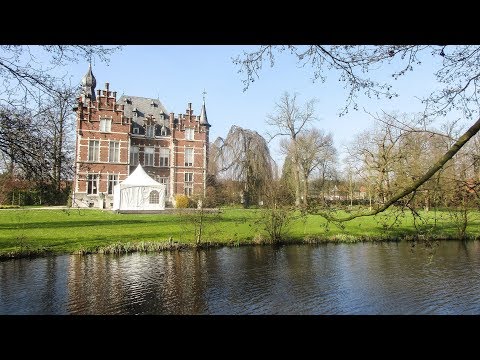
Blauwendael Castle, locally known as Kasteel Blauwendael, is a historic estate situated in the East Flemish town of Waasmunster, Belgium, specifically at Kerkstraat 21. The site has been associated with the De Neve de Roden family since the early 17th century, when Pieter de Neve constructed an initial moated mansion between 1607 and 1608. This original structure, once called Huys int midden van't Durp, was surrounded by ramparts that today survive only as a decorative pond within the grounds. In 1820, Henri Philips de Neve commissioned significant alterations to the surrounding park, which likely included the addition of an orangery while demolishing older outbuildings to create space for new landscape features.
The current castle building dates from 1889 to 1890, erected under the direction of Emile de Neve de Roden and Emma de Bueren. Designed by architect Jozef De Waele, the structure is a prominent example of Flemish Neo-Renaissance architecture, characterized by its distinctive turrets and stepped gables. The interior design faithfully mirrors this external stylistic choice, preserving the aesthetic unity of the late 19th-century renovation. Following its construction, the property changed hands and was eventually sold to Henri de Lovinfosse before entering a new chapter in its long history.
In 1980, the municipality of Waasmunster purchased the castle, marking a transition from private residence to public asset. The adjacent park was opened to visitors the following year, allowing the community to enjoy the historic grounds. By 1984, the castle itself was repurposed to serve civic functions, operating as a wedding hall and exhibition space. This adaptive reuse has ensured the preservation of the building while maintaining its role as a cultural landmark within the region. Today, it stands as a testament to the architectural heritage of East Flanders, blending centuries of family history with modern public utility.
Details
- Location Text
- Waasmunster