Oulu Castle

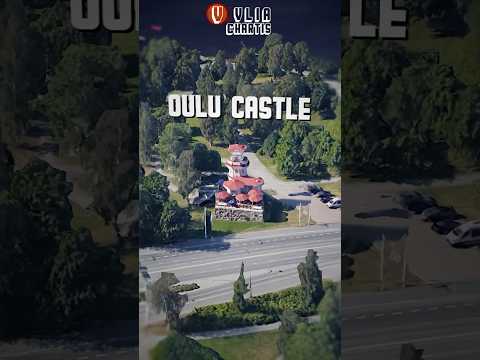
Oulu Castle is a former defensive fortress located on Linnansaari Island within the delta of the Oulu River in Oulu, Finland. While historical records suggest an earlier medieval structure existed on the site as early as 1375, which successfully withstood a Novgorod attack in 1377, the prominent castle known today was constructed in 1605. Commissioned by King Charles IX of Sweden, this iteration replaced older wooden and earth defenses with a fortified rampart system featuring fire shelters. The architectural design focused on practical military defense rather than residential grandeur, utilizing a mix of stone foundations for storage and extensive wooden superstructures for housing and operations.
The castle holds significant historical importance as a strategic stronghold during Sweden's rule over Finland, yet its existence was marked by violent destruction. In 1715, Russian forces severely damaged the facility by setting it ablaze during the Great Northern War. The final demise of the main structures occurred on July 31, 1793, when lightning struck a powder magazine, triggering a massive explosion that almost completely obliterated the building. This catastrophic event effectively ended the castle's military utility, leaving behind only scattered ruins and the sturdy stone cellar that had housed the explosives.
Today, the site serves as a cultural landmark rather than a military installation. The remaining powder magazine was repurposed in 1875 to support an observatory for the Oulu School of Sea Captains, designed by architect Wolmar Westling. Since 1912, this historic structure has operated as a cafeteria and hosts a small exhibition detailing the rich history of the castle. Visitors can explore the stone cellar ruins to learn about the fortress's evolution from a medieval outpost to its dramatic end, making it a key point of interest for understanding the regional history of Oulu and Finnish coastal defense.
Videos

![Walking around Oulu City Centre & Pikisaari, July 2021, Finland [4K]](https://img.youtube.com/vi/7_HN2kooBPw/hqdefault.jpg)
Details
- Condition
- Totally ruined
- Year Built
- 1375
- Location Text
- Oulu