Jiayuguan Castle

Jiayuguan Castle, also known as Jiayu Pass, stands as the first frontier fortress at the western terminus of the Ming dynasty Great Wall. Located in Gansu province, approximately six kilometers southwest of the modern city of Jiayuguan, the structure occupies the narrowest point of the Hexi Corridor between two dominating hills. Built near an oasis that once marked the extreme western edge of imperial China, it served alongside Juyong Pass and Shanhai Pass as a primary gateway. During the Ming period, this strategic location facilitated the entry of foreign merchants and envoys from Central and West Asia into China, functioning as a critical hub for trade and diplomatic relations.
The fortress features a distinctive trapezoid shape with a perimeter of 733 meters and walls rising 11 meters high. Its architectural design includes three defensive lines comprising an inner fort, an outer fort, and a protective moat. Two main gates anchor the east and west sides, each topped with a building, while turrets guard every corner. The north and south sides connect directly to the extending Great Wall sections, which historically utilized rammed earth and mud brick construction. Wide internal roads allow access to the ramparts, emphasizing its military utility. Although some sections show signs of age without recent restoration, the site remains a prominent example of ancient Chinese military engineering.
Beyond its physical grandeur, Jiayuguan is steeped in local lore regarding its precise construction. A famous legend tells of a designer who calculated the exact number of bricks needed, requesting just one extra brick beyond the estimated 99,999. Upon completion, exactly one brick remained unused, and it reportedly sits loose on a gate to this day as a testament to the builder's meticulous planning. First described in detail by traveler Mildred Cable in 1923, the pass continues to attract visitors interested in its historical significance and enduring myths.
Videos
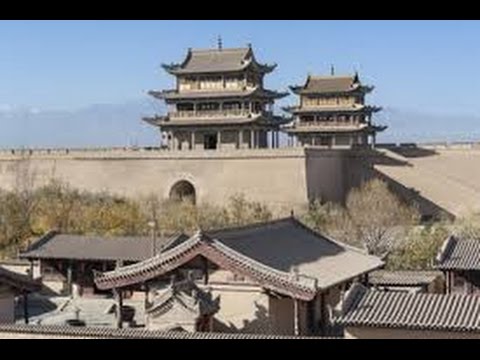
#Chine #désert de #Gobi la forteresse de Jiayuguan
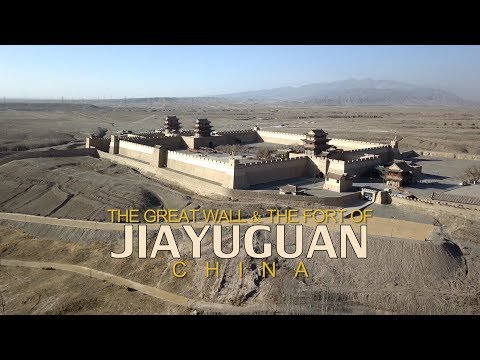
The Great Wall & the fort of Jiayuguan (CHINA) | Episode 1 | 中国长城要塞—嘉峪关
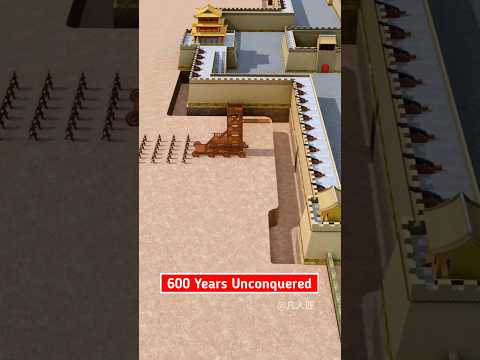
🔥 No one has been able to conquer this fortress for 600 years! | Jiayuguan Fortress...#Shorts #yo...
Why did the 1st emperor of the Ming Dynasty decide to build Jiayuguan fortress? | China Documentary
Details
- Location Text
- (嘉峪关)