Holbæk Castle

Holbæk Priory, historically linked to the development of Holbæk Castle, was a Dominican monastery located just south of Holbæk on the island of Zealand, Denmark. Established by 1275 during a period when the town supported the king against the Bishop of Roskilde, the complex played a significant role in elevating the town's stature. While the original structures suffered damage in a town fire in 1287, they were subsequently rebuilt and expanded. The architectural ensemble evolved over centuries, featuring a church dedicated to St. Nicholas in 1323 and a south range constructed in the mid-15th century using red bricks in the Gothic style. This surviving section includes a two-story refectory with a vaulted cellar, while other ranges housed friars' cells, a chapter hall, and a library, all arranged around a quadrangle with a cloister and garden.
The priory enjoyed considerable royal favor, particularly from King Christopher of Bavaria and Queen Dorothea of Brandenburg, whose generosity facilitated major expansions. As a mendicant order, the Dominicans relied on gifts of property, fishing rights, and fees for religious services to sustain their works, which included supporting schools and hospitals. The church became a prestigious burial site for local nobles and officials, many of whom were commemorated with large tombstones set into the floor, several of which remain preserved today. Despite its royal connections, the monastery remained relatively small, typically receiving modest financial contributions recorded in pennies or guilders.
The institution's existence was ultimately threatened by the Protestant Reformation in the early 16th century. During the Count's Feud, a civil war that solidified Lutheran dominance in Denmark, the Dominicans mistakenly supported Count Christopher of Oldenburg and the deposed Catholic King Christian II. Following the victory of the staunchly Lutheran Christian III and the adoption of the Lutheran Ordinances in 1536, Catholic influence was eradicated. Facing increasing hostility toward mendicant orders and struggling financially, the friars abandoned the buildings by February 1535, marking the end of the priory's continuous operation as a religious house.
Videos
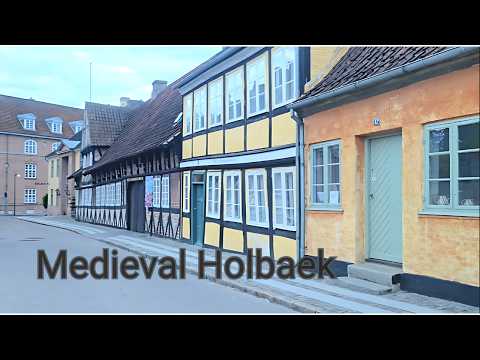
A Walk Through Time | Medieval Holbæk | Walks with T

Discovering Holbæk: A Hidden Gem One Hour from Copenhagen | Must-See Sights and Historic Treasures

Inside the Danish Royal Family's Final Summer Tour! 👑🇩🇰 #shorts
EUROPE DENMARK | Exploring Holbæk #holbæk #facebook #danmark #youtube #tiktok #followers #trending