Château de Walzin

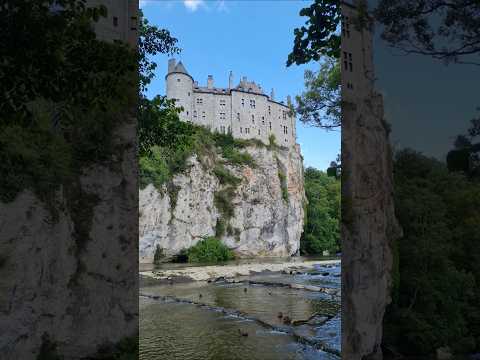
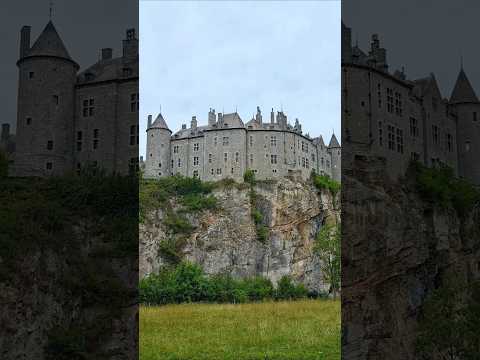
Château de Walzin is a historic fortress located in Dréhance, a district of Dinant in the Namur province of Wallonia, Belgium. Perched dramatically on a steep rock overlooking the right bank of the Lesse River, the site has served as a strategic military point since the 11th century. Originally an 11th-century hill castle possibly built by Theodwin of Liège, the structure functioned as an eagle's nest guarding a river ford. Throughout its long history, the stronghold was razed to the ground four times, including a deliberate destruction ordered by the Prince-Bishopric of Liège in 1489 and burning by French forces in 1554. Despite these devastations, the original 11th-century keep and sections of thick defensive walls have survived, standing as testaments to its turbulent medieval past.
The castle's current appearance is largely the result of extensive renovations undertaken in the late 19th and early 20th centuries. After Baron Alfred Brugmann acquired the ruins in 1850, architect Émile Janlet restored the building in a Spanish-Flemish style by 1881. A subsequent reconstruction between 1930 and 1932, commissioned by Baron Frédéric Brugmann de Walzin and designed by Octave Flanneau, adopted the regional Maasland style, giving the castle its distinctive Gothic Revival look today. The grounds include gardens designed by Louis Julien Breydel, set within the wooded Bois du Chaleux. Notably, the famous writer Victor Hugo sketched the site in 1863, capturing its romantic ruinous state before the final restoration.
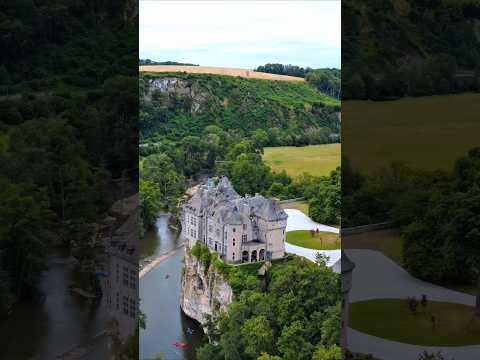
Today, Château de Walzin remains a private residence and is not open for interior public viewing. However, visitors can access the beautifully landscaped gardens, which feature guided walks every Thursday morning during the summer months. The castle's imposing silhouette is also a popular sight for tourists navigating the Lesse Valley via kayak, offering a unique perspective of the architecture from the river below. While the main building is inaccessible, the preserved ruins of the ancient keep and the surrounding natural beauty continue to make it a significant landmark in Belgian heritage.
Videos
Details
- Location Text
- Dréhance, Dinant