Kufstein Fortress

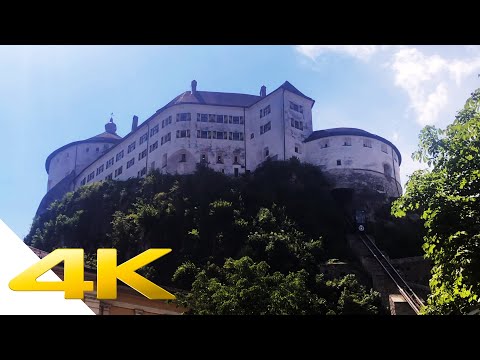
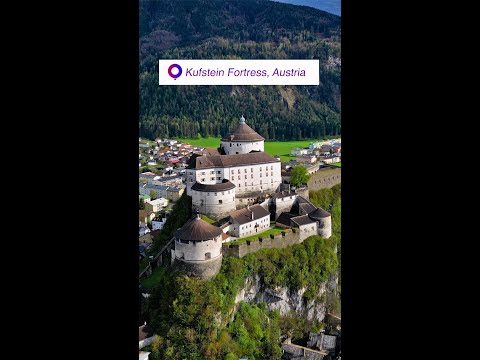
The Kufstein Fortress stands as the primary landmark of Kufstein in Tyrol, Austria, perched on a hill 507 meters above sea level to command views of the town below. First documented in 1205 as Castrum Caofstein, this historic stronghold was originally a possession of Bavarian dukes and the Bishop of Regensburg. Its strategic location made it a fiercely contested site between Bavaria and Tyrol for centuries. The fortress underwent significant architectural expansion under Emperor Maximilian I, who conquered the site in 1504 and commissioned the construction of a massive round tower between 1518 and 1522 to enhance its defensibility. Although it changed hands several times, serving as a Bavarian possession from 1703 to 1805, it permanently returned to Austrian control in 1814. Today, visitors can access the well-preserved structure via the Festungsbahn, a short funicular railway connecting the city center to the hilltop entrance.
Beyond its military function, the fortress holds deep historical significance as a notorious prison for political dissidents during the Habsburg era. It is particularly embedded in Hungarian history, having housed prominent figures such as the revolutionary Sándor Rózsa, poet János Batsányi, and educator Blanka Teleki. The site also detained Polish prisoners following the 1846 Kraków Uprising. In a unique twist on its martial past, the fortress now features the Heroes' Organ, constructed in 1931 as a World War I memorial. Distinguished as the largest open-air organ in the world, this instrument serves as a cultural centerpiece. Currently operating as a major tourist attraction, the Kufstein Fortress combines medieval architecture with poignant historical narratives and modern cultural events.