Burgruine Gradenegg

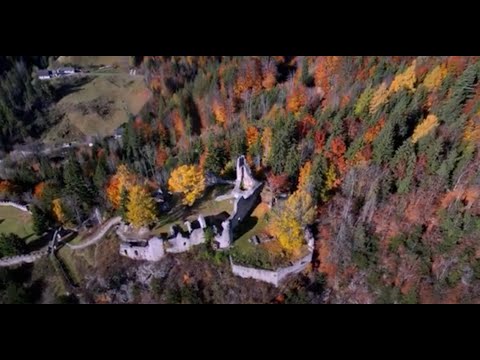
Burgruine Gradenegg is a ruined medieval castle situated in the municipality of Liebenfels within the state of Carinthia, Austria. Perched on a low, rocky hilltop approximately 300 meters above the Glantalboden valley, the site offers commanding views of the surrounding market town. First documented on May 27, 1192, the fortress was originally held by Rudlandus de Gradnich, a ministerial servant of the Carinthian Duke, and remained in the possession of the Lords of Gradenegg until 1436. The initial construction dates back to the late 12th century, establishing it as a significant historical landmark in the region with roots stretching back over eight centuries.
Architecturally, the complex is defined by a massive Romanesque keep that forms its core, surrounded by farm buildings dating from the 14th and 15th centuries. A three-storey great hall, part of the original structure, was extensively remodeled and extended during the 16th century, featuring elegant marble windows and door walls. The entire site is encircled by a 15th-century ring wall with a small corner tower in the northeast, while a substantial moat on the north side once provided additional defense. Historical records indicate that Roman copper and silver coins were discovered near the site in 1787, suggesting earlier activity or trade connections in the vicinity.
The castle's decline began in earnest after a severe earthquake in 1796 caused significant structural damage. Following this natural disaster, the property was relegated to use as stables and agricultural outbuildings rather than a noble residence. Although a drawing by artist Markus Pernhart from around 1870 depicted the ruins with their roofs still intact, the complex has since fallen into a state of decay. Today, Burgruine Gradenegg stands as a testament to medieval military architecture and regional history, preserving the remnants of its great hall, keep, and defensive walls for visitors interested in Austria's feudal past.