Burg Mauterndorf

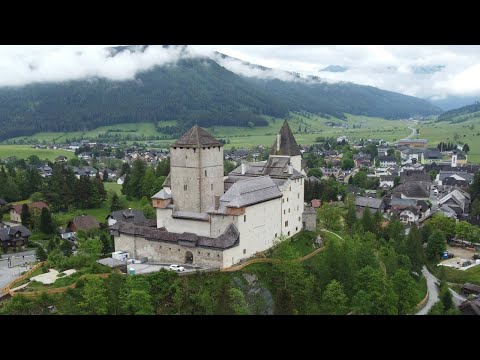
Mauterndorf Castle, known locally as Burg Mauterndorf, is a well-preserved hill castle located in the municipality of Mauterndorf within the Austrian state of Salzburg. Situated at an altitude of 1,138 meters, the structure was originally built around 1253 by the Prince-Archbishops of Salzburg, though it likely stands on the site of a Roman fort dating back to at least AD 326. This earlier fortification guarded a vital mountain road through the Radstädter Tauern Pass. The medieval castle derived its name and funding from a toll collection system established for this route. Over the centuries, particularly during the fifteenth century under Archbishops Burkhard Weisbriach and Leonhard von Keutschach, the fortress was significantly enlarged to reach its current architectural form.
The castle possesses a unique modern history linked to Hermann Epenstein, a Prussian army surgeon of Jewish descent who purchased the decayed property in 1894. Epenstein extensively restored the building for use as a private residence and was ennobled by Emperor Franz Joseph I in 1908. Notably, Epenstein was the godfather and mentor to Hermann Göring, the future Nazi leader, who frequently stayed at the castle as a child and later sought refuge there in 1923. Following the abandonment of the toll system in 1803 and subsequent state ownership, the castle eventually returned to public hands. Today, owned by the State of Salzburg, Mauterndorf Castle remains in preserved condition and is open to the public, serving as a historical landmark that bridges Roman military history, medieval ecclesiastical power, and complex twentieth-century narratives.